
The client & the challenge
The client. Hook & Punch LLC makes leather goods in the US, including leather notebook covers in which an elastic cord retains the book in the cover. For two of its cover formats (Joy and Joss), it needed black 2.0 mm elastic shock cord finished on both ends with metal T-bar / barb tips — with one demanding detail: the metal ends had to sit nearly flush with the cord, with no visible bulge.
The first production run is 3,000 pieces — ordered only after physical samples passed testing.
What wasn’t working. In the client’s account, the brand’s existing hardware suppliers didn’t carry a finished cord assembly with bright metal ends; the closest available matches used stamped steel ends that didn’t meet the requirement — and in the form needed, the part effectively didn’t exist off the shelf.
Varestaq’s role. Independent sourcing coordinator — not a factory. We designed the sample plan, ran two supplier routes in parallel, inspected and documented every sample set ourselves, and arranged the consolidated shipment through a freight forwarder.
What we did
Two routes, one spec. Instead of asking one supplier to describe a catalogue part, we had two independent routes produce the same written spec — so the client could compare real samples side by side instead of claims.
Materials disclosed in writing, before production. Neither route’s supplier described the ends as solid brass, and we said so plainly before anything was made: one route’s ends were described by its supplier as iron-based with a gold-tone finish; the other route’s ends were described by its supplier as stainless steel in a silver-nickel tone. These are the suppliers’ own material descriptions — we did not laboratory-test the metals; our own checks were hands-on, as described below. The client reviewed the trade-off and accepted the samples for what this run was — functional testing of fit, length and elasticity. Appearance colour is not material proof, and no one had to discover that on delivery.
Expectations locked before production. The full spec was received on October 2. The three test lengths were selected on October 5–6 — 4", 4.625" and 5.25", measured including the ends — the lengths that would produce meaningful results. On October 12, the materials, finishes and the ends’ hollow-tube construction were confirmed point by point in writing, and the client sent his own caliper measurements as reference.
Checked by hand, on camera. Each route’s samples were inspected separately in Shenzhen: weighing, caliper measurement, close-ups of the ends against the cord, a manual firmness check, a surface check for burrs, then labelling and separate packing per route. 32 inspection photographs were archived as the check record. (These are documented in-house checks — not a third-party laboratory report.)
Dispatched through the forwarder. After inspection, the two sample sets were handed to a freight forwarder for consolidated DHL shipment. DHL tracking showed the parcel departing Hong Kong on October 18, with delivery estimated for October 26; the samples arrived at the client on October 23, three days ahead of that estimate.
Timeline
| Date (2026) | Step |
|---|---|
| Oct 2 | Client sends the complete spec — cord, end style, lengths, target quantity |
| Oct 5–6 | Sample plan confirmed; three test lengths selected for functional testing |
| Oct 7–8 | Sample project invoiced and paid — six days after first contact |
| Oct 12 | Materials and construction locked in writing before production; client sends his own caliper reference measurements |
| Oct 15 | Both routes' samples inspected and photographed (32 check photos on file), packed separately per route and handed to the freight forwarder |
| Oct 18 | Parcel departs Hong Kong by DHL (per tracking record); delivery estimated Oct 26 |
| Oct 23 | Samples arrive at the client — ahead of estimate; testing begins the same week |
| Nov 1 | Production order placed — 3,000 pieces; production begins |
| Nov 6 | Production finish accepted by the client — slightly less bright than the October sample, confirmed from photos before the run |
| Nov 13 | Production run finished — 3,000 pieces, reported complete |
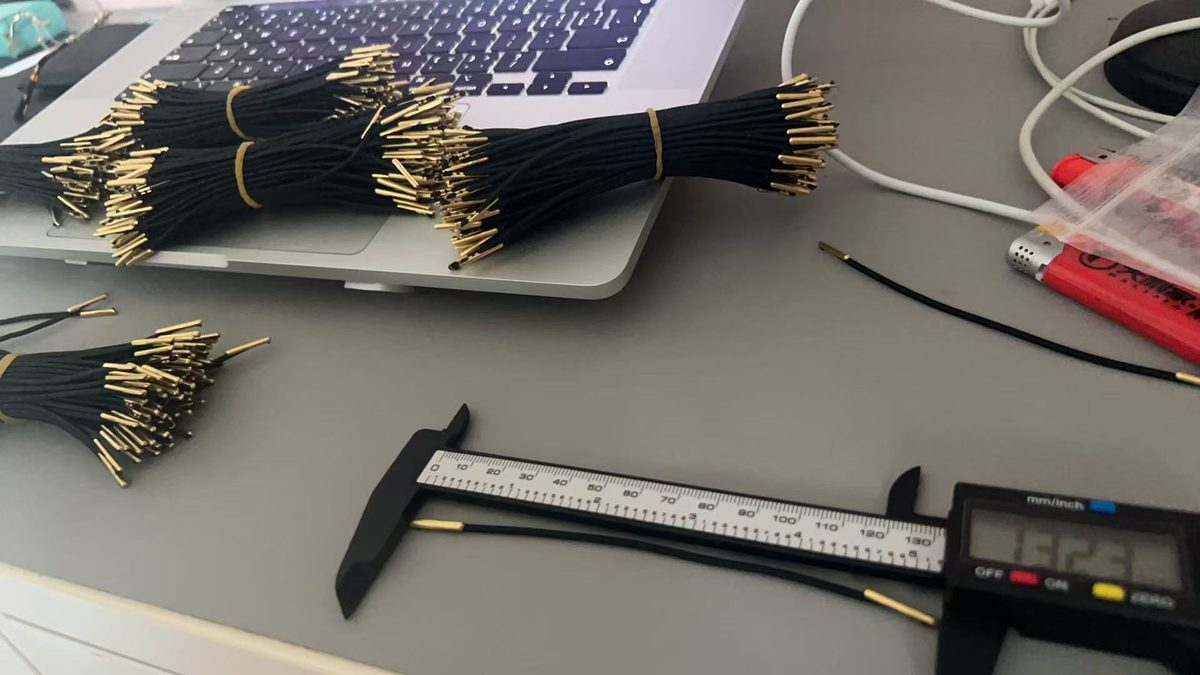
| Nov 14 | Finished pieces received and spot-checked in Shenzhen: a finished piece measured 132.3 mm (spec 13.3 cm ± 0.5 cm); the goods weighed just over 2.5 kg |
The checks, on camera
Real photos from this project, taken during our inspection in Shenzhen on October 15, 2026.

- “Every sample set is checked by hand before it is packed — fit, finish and feel.”
- “Key dimensions measured and sets weighed as part of the recorded check.”
Three photos the client attached to his October 23 testing email, showing the samples in his own carry and notebooks.
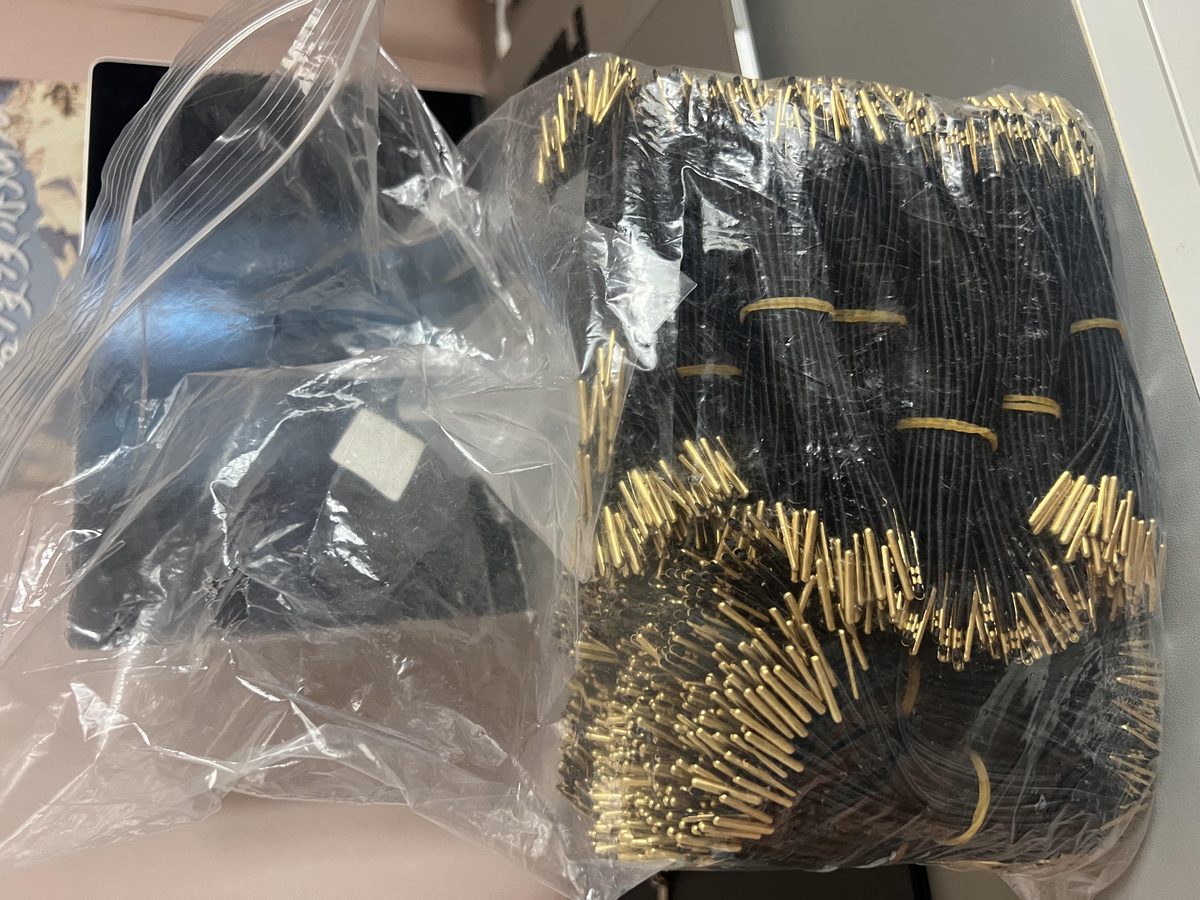
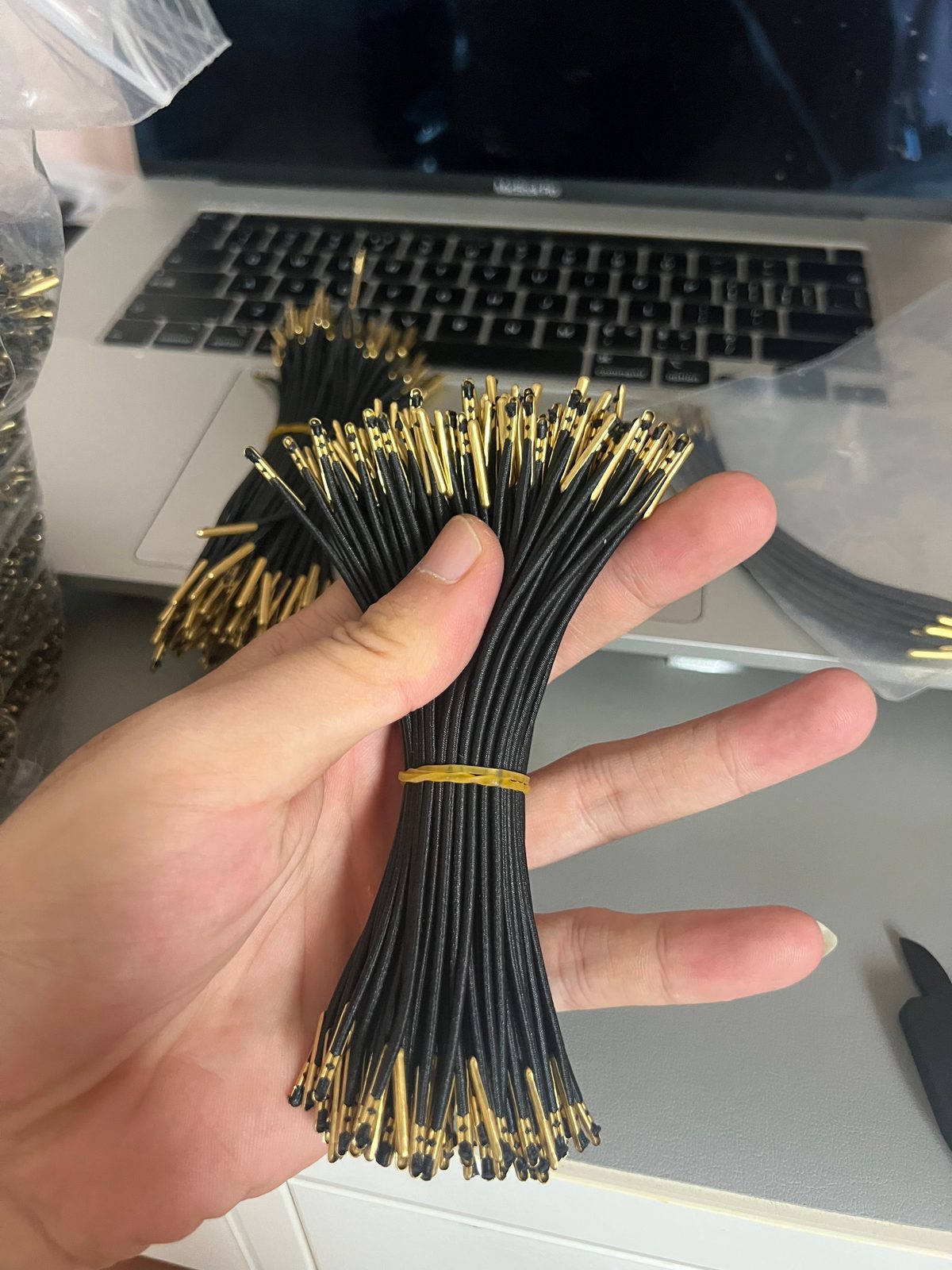
The production run, finished
Real photos from this project, taken in Shenzhen on November 14, 2026, when the finished run arrived for checking.
In the client’s words
On arrival (email, October 23, 2026):
“Samples have arrived and look great.”
On testing, the same week (email, October 23, 2026):
“I put one sample (joy 5.25") in my personal carry and will see how I like it over the next few days. I will be putting a (joy 4.625) sample in another book tomorrow and I will try the Joss samples next week. I think the 4" Joss samples will be too short as the seem to have a firmer elastic.”
“Thank you again for getting me these samples, they look very good.”
— Andrew, Hook & Punch LLC
Where the project stands
The first production run is finished: 3,000 pieces made and received in Shenzhen, spot-checked here — a finished piece measured 132.3 mm against the 13.3 cm ± 0.5 cm spec, and the goods weighed just over 2.5 kg. Shipment to the client by UPS is being arranged; delivery will be added here once confirmed.
Client authorization
“Feel free to write up a case study. Its an honor to be the first full run!”
— Andrew, Hook & Punch LLC, by email, October 23, 2026
Have a hardware spec you’d like a second pair of eyes on?
Send us one spec you’re currently buying — sizes, finish, and the material description you’ve been given. We’ll review it for free: whether the spec is complete, whether the dimensions and tolerances are workable, and whether the material description holds together on paper. The review covers the spec itself; it does not include supplier sourcing or price comparison. No obligation either way.